Issue
Zhang Peili: Meditations on anxiety, mortality, and human paradoxes
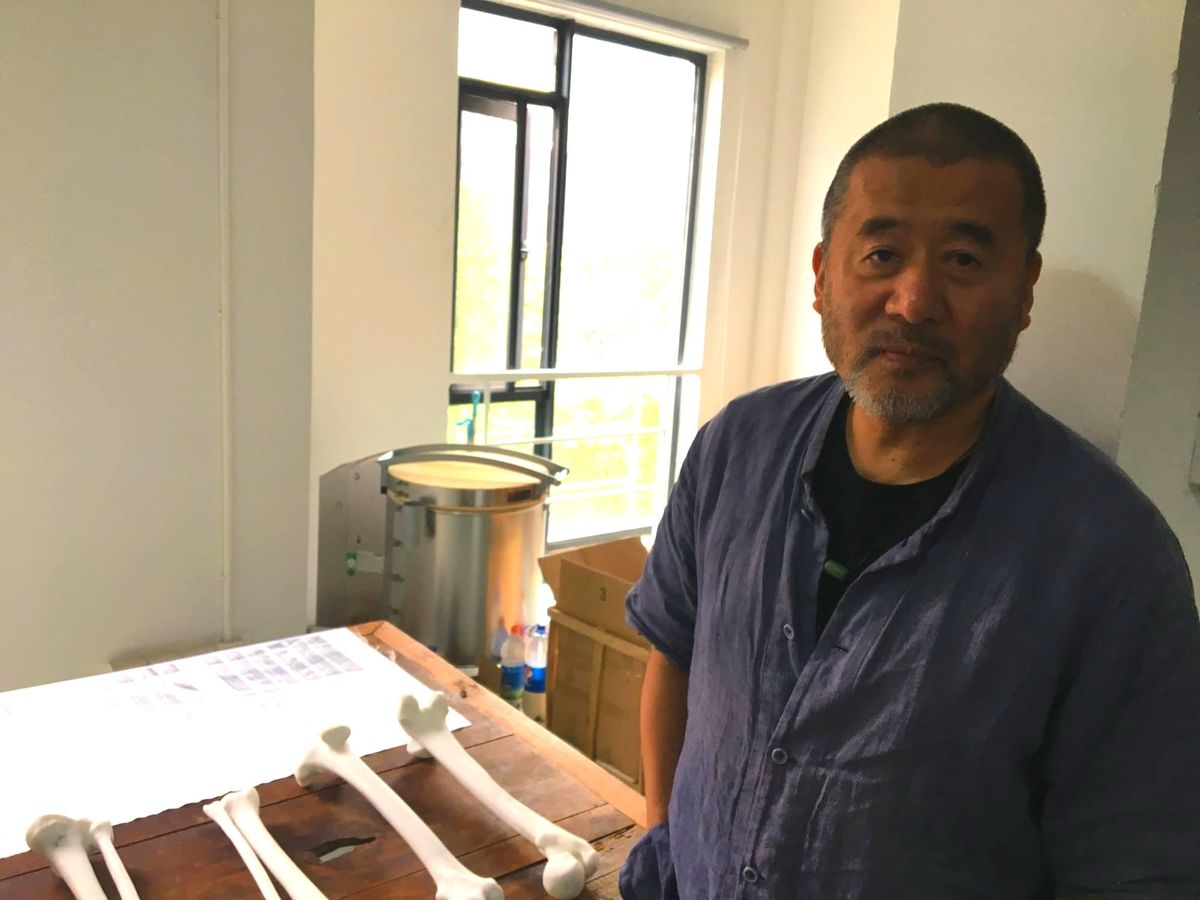
For centuries, scenic Hangzhou, once the capital of the Southern Song dynasty, and the calm waters of nearby West Lake, have served as muses for artists and poets. China’s first fine-arts university, the China Academy of Art, was established there in 1928. The institution’s graduates include some of the nation’s best-known artists today. Among them is Zhang Peili.
Born in Hangzhou in 1957, Zhang’s relationship with the city is long and storied. As an oil-painting student at the Academy, Zhang met fellow artist Geng Jianyi, with whom he collaborated on the radical “New Space ’85” show at the school, displaying some of the country’s earliest installation art, inspired by Marcel Duchamp, a departure from the then widely endorsed socialist realism style. Shortly thereafter, the duo cofounded the short-lived collective Chi She (Pond Society), staging artworks throughout Hangzhou’s public spaces to critique the bureaucratization of art. Today, Zhang has embraced a multidimensional approach where he participates both within and outside of the institutional system. He serves as the director of the OCAT Shanghai museum and teaches at the Academy, where he helped establish a new-media department in 2003. He maintains two permanent studios in Hangzhou, one dedicated to paper works and conceptualizing designs, and the other to videos and projects in their final stages.