Issue
Up Close: Li Ran
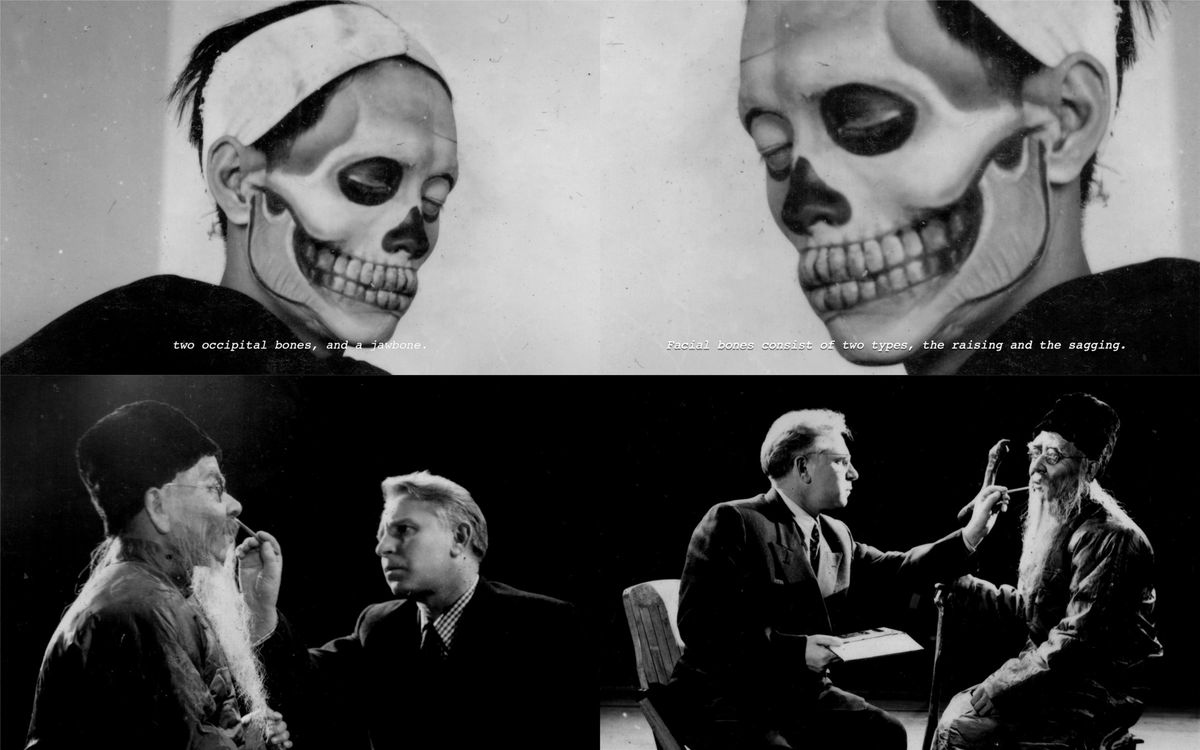
“The features of the human skeleton vary from person to person while the skeletal structure reveals similar objective patterns,” Li Ran narrates at the beginning of Persona Swap (2017–19), as a black-and-white photograph of a face painted to resemble a skull fades into view, swiftly joined by its mirror image in the video’s second channel. In the lilting voice-over of midcentury film dubbers, Li relates the teachings of Soviet dramaturge V. V. Terevtzov, who in 1958 arrived at the Shanghai Theatre Academy as a makeup coach. Reeling through archival photographs of costumed actors, Li explains Terevtzov’s precept of “thinking in front of the mirror,” or conjuring the character from one’s maquillaged reflection. As Li expounds on the “class attitude” signaled by the beards of revolutionaries, and later warns of “unsevered feudal thoughts” to an image of a servant plotting against a “gentle princess,” Persona Swap gestures at the superficial refashioning of heroes and villains across ideological discourses. Eventually, we learn, the Sino-Soviet split sends Terevtzov packing and heralds a slew of Chinese espionage films in the 1960s featuring actors in whiteface as the enemy.