Issue
Staging Collectivism: A Good Idea, Poorly Executed
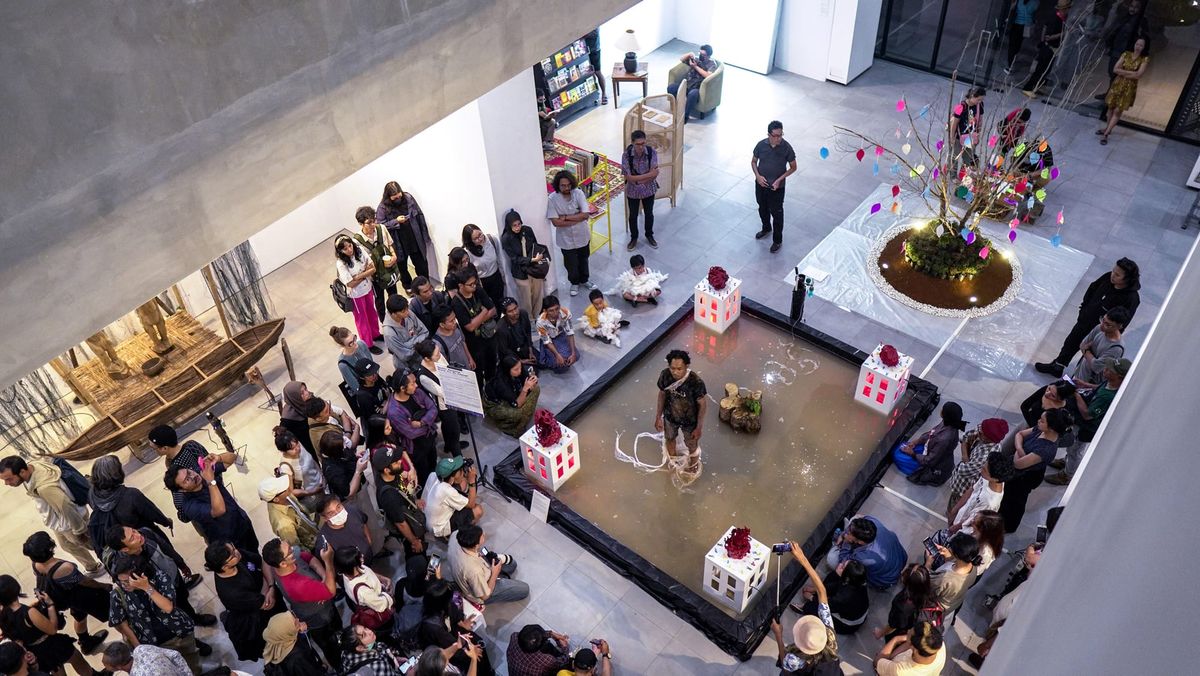
Collectivism in art has a long history, recently renewed with discussion about the complexities of a non-hierarchical approach to curating and organizing large-scale exhibitions and biennials. When it comes to what we mean by “collective curation”—its pros and its cons—the 2024 Jakarta Biennale (JB24) was a case in point. Here a large number of local collectives took the role of artists, organizers, curators, and producers for a 50-day celebration of Jakarta Biennale’s 50th edition.
JB24 highlighted how far the capital city’s marquee art event has come since its first edition—the Great Indonesian Painting Exhibition in 1974—which was organized by (the term “curated by” was largely unheard of then) the Jakarta Arts Council. At the time, oil painting dominated the art landscape, and highly respected painters, such as AD Pirous and Widayat, either served on the jury or comprised the majority of the shortlisted participants and eventual winners. Fast forward to 2024 and the city’s biennale replaced a monolithic body of curators with a vast, loose network of disparate collectives—specifically a mega-collective known as the “Majelis Jakarta” (Jakarta Assembly). And it was through this mechanism that we learned valuable lessons about curation and collectivism that resonated beyond the parochial environs of Jakarta.