Issue
Seoul: “Suki Seokyeong Kang: Willow Drum Oriole”
Suki Seokyeong Kang
Willow Drum Oriole
Leeum Museum of Art, Seoul
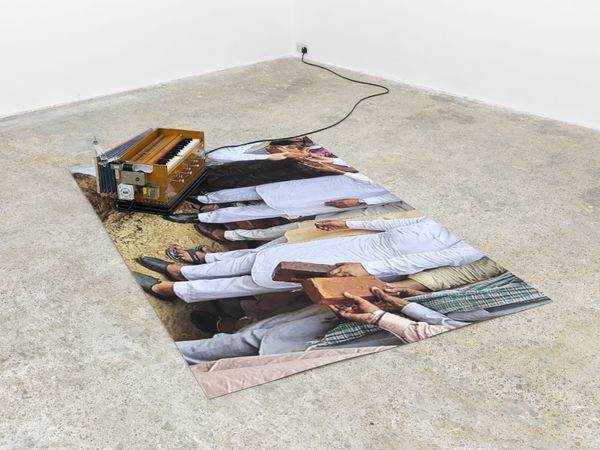
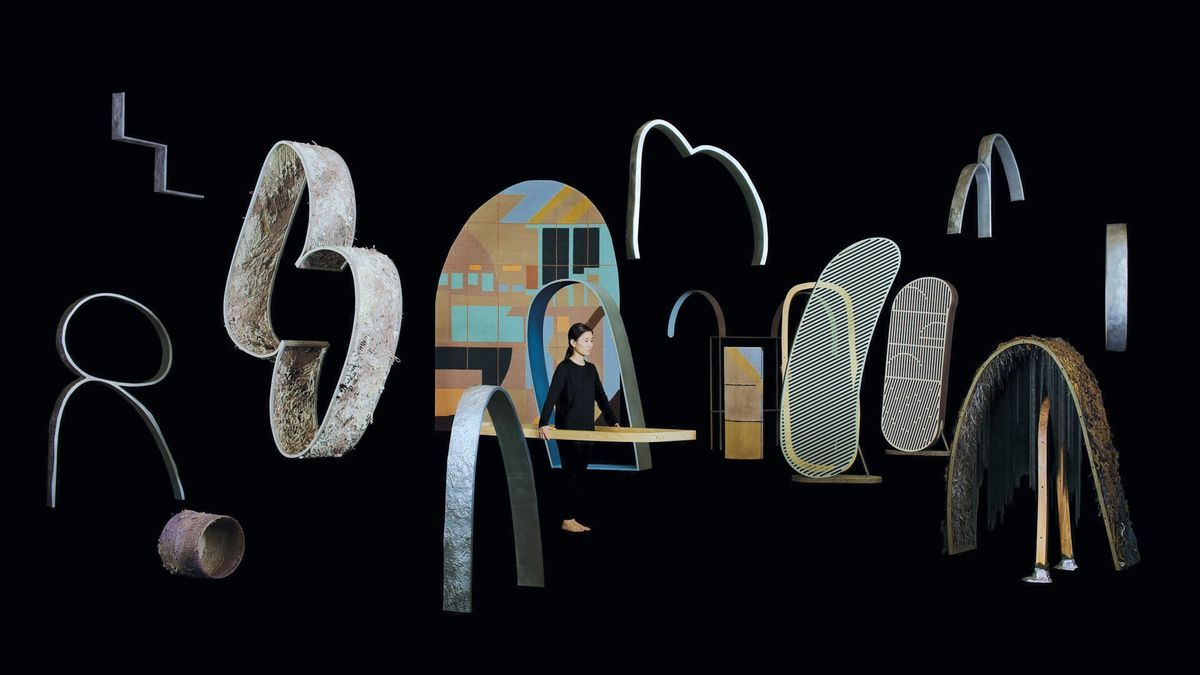
One of the most traditional artists working in the field of contemporary art in Korea today is Suki Seokyeong Kang, though this can be hard to recognize when first encountering her artworks, which can take the forms of abstract paintings, geometric wall sculptures, dyed-reed panels hanging or lying on the floor, and are frequently combined as installations or in videos. Kang’s traditionalism is not a reactionary outlook. Rather, it is a foundational position of cultural continuity that undergirds her practice and its proliferating forms. Kang consciously inserts herself into a lineage of Korean visual art, music, poetry, and dance that spans the Joseon dynasty (1392–1897/1910) and crucially transcends Japan’s occupation (1910–45), the 1950–53 war, and extends to the 70 years of postwar division and modernization that continues to this day.
Curated by June Young Kwak, Kang’s exhibition “Willow Drum Oriole” at the Leeum Museum of Art was an expanded, spatialized staging of her interpretation of Korean sansuhwa (“mountain and water,” or landscape) painting—of which the Leeum has a famous collection. The title refers to the multisensory forms of awareness found in gagok, traditional poems set to music in which classic sages watch and listen to birds’ movements through trees and the larger landscape. Those lines of flight sages likened to weaving across fabric, a metaphor that Kang materializes in her sculptures that often feature surfaces woven with colorful patches of wool.