Issue
Inside Burger Collection: Robert Gober: The Erotics of Amputation
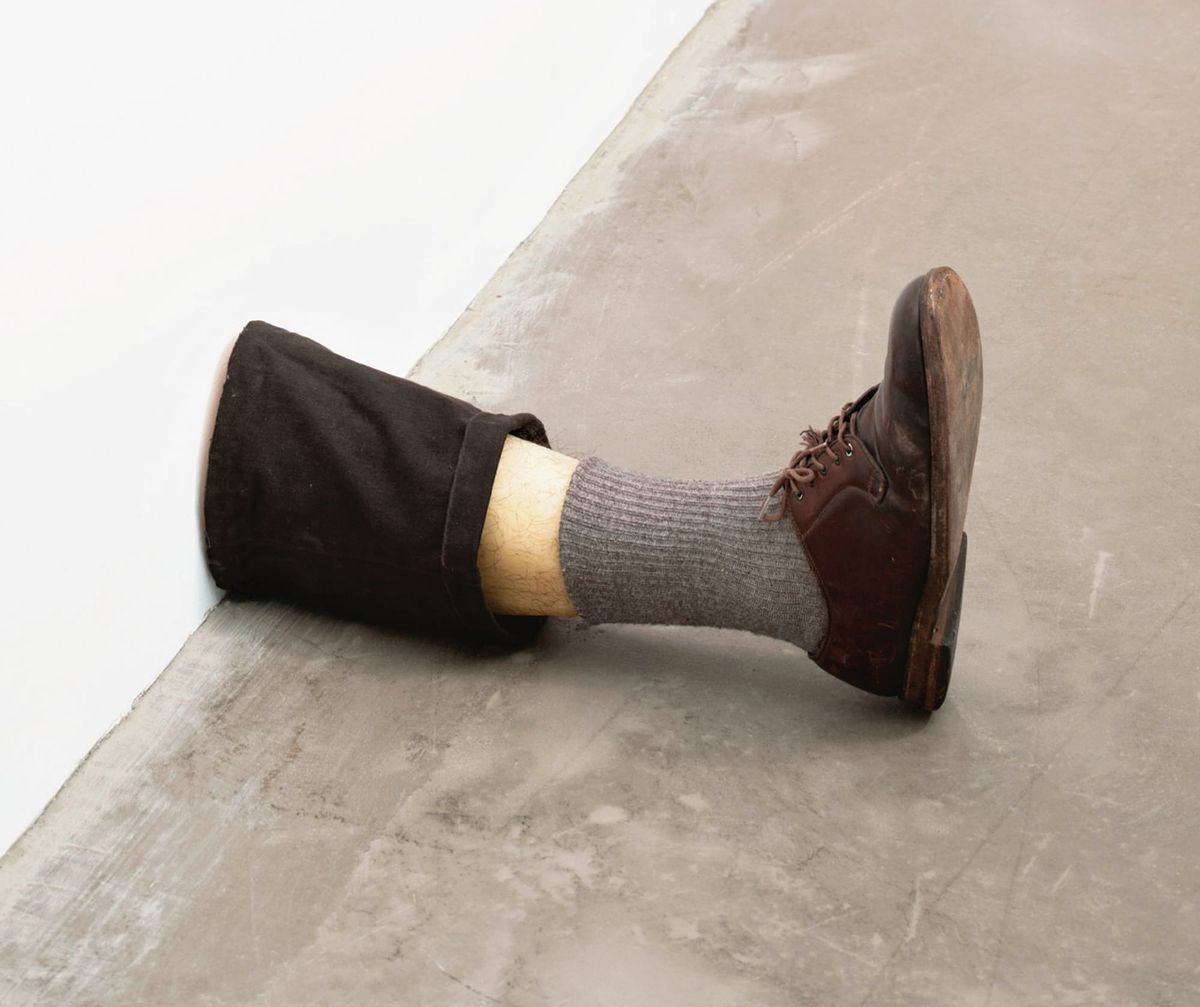
Robert Gober was born in a small town in Connecticut in 1954 and is known for his wry, terse, whimsical sculptural lexicon and his depiction of domestic, quotidian objects, such as legs, babies’ cribs, doors, wallpaper, newspapers, and kitchen sinks. He came to prominence in the 1980s and 1990s with works that were widely associated with the postminimalist movement in New York, many of which draw favorable comparisons to Marcel Duchamp’s readymades, as well as the assemblages of the Surrealists. Over the decades Gober has adapted and recreated his works for solo exhibitions and permanent installations at seminal institutions and events such as the Venice Biennale and Whitney Biennial, the Museum of Modern Art in New York, the Schaulager in Basel, and the Serpentine Gallery in London.
Despite his celebrated status in the West (albeit one shrouded in a certain mystique), Gober has remained largely absent in Asia, and an overview of his career which includes hundreds of exhibitions from as early as 1979 reveals, somewhat tellingly, participation in only two Asian group exhibitions over that same period, namely, “Mirrorical Returns: Marcel Duchamp and 20th Century Art” at the National Museum of Art, Osaka, in 2004 (which later traveled to Yokohama Museum), and “De-Genderism” in Tokyo’s Setagaya Art Museum, curated by Yuko Hasegawa, in 1997. This regional exposure was a brief spark amid the neoliberal fervor of globalization around the turn of the millennium when Asian institutions contemplated their inheritance of the ongoing legacy of modernism vis-à-vis Duchamp, while continuing to deconstruct and emphatically resist given ideological and at times colonial structures concerning gender and body.
How might one conceptualize Gober’s legacy today, when the cinder of our feverish dreams of progress have once again decayed into a dark teleology of disembodiment, epidemic, war, genocide, violence, and death? Are there trodden pathways or artifacts that can augur toward a future that holds both grief and humor, shame and dignity, submission and hegemony, horror and love, profanity and reverence, mania and serenity?