Issue
London: Collectivity and Solidarity
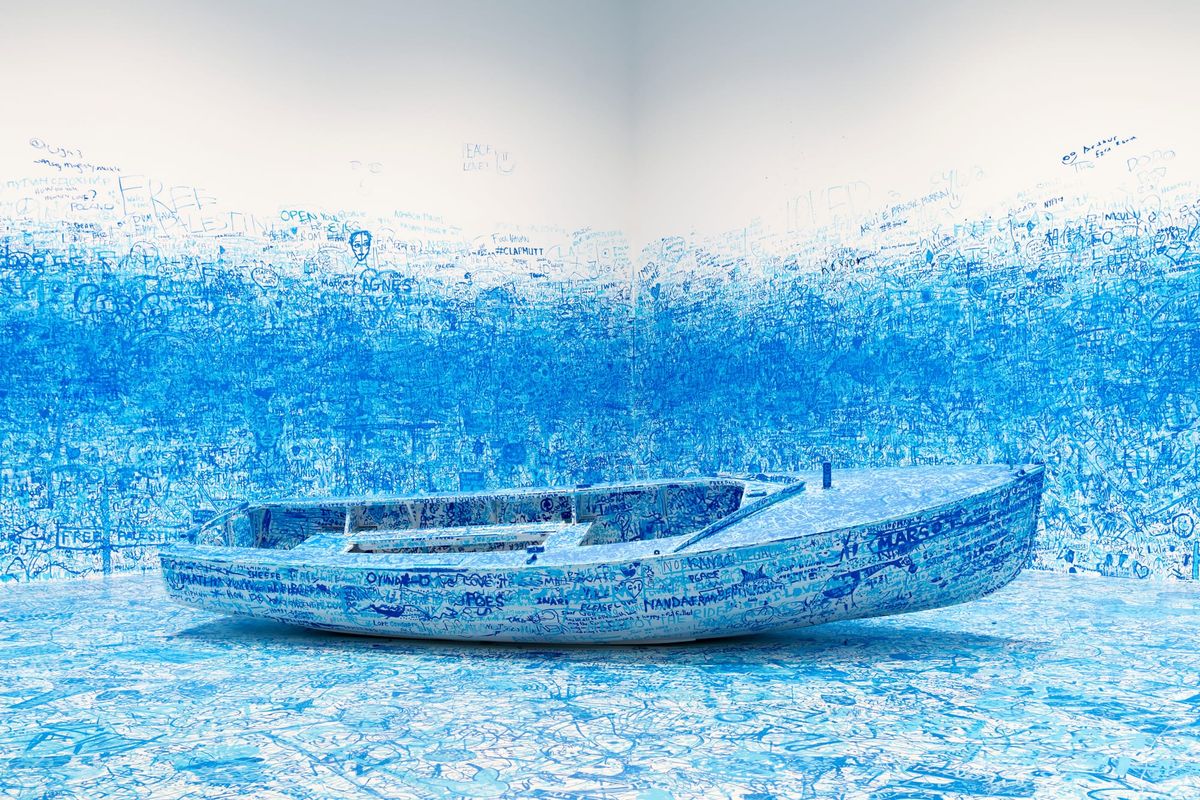
With worldwide elections looming, and the UK grappling with the profound effects of 14 years of austerity, 2024 kicked off with a resounding statement of inclusivity. In January, Taloi Havini was announced as the winner of the UK’s largest contemporary art award, Artes Mundi 10, presented in partnership with the Bagri Foundation. Havini, from the Nakas/Hakö tribe of Bougainville in Papua New Guinea, exhibited a powerful three-channel video installation in Wales and London, shedding light on destructive mining and the dumping of toxic waste in her hometown.
Her urgent call to recognize humanity’s domination over the natural world epitomizes the art London is spotlighting—the impacts of globalization and capitalism; environmental degradation; climate change; and ultimately, Indigenous and human rights. Pro-Palestine marches and calls to action by the network Artists for Palestine UK continued throughout the capital. In March, the British Museum was forced to close after Energy Embargo for Palestine held a protest against their renewed sponsorship with BP, drawing links with the conflict in Gaza. While in May, Baillee Gifford withdrew funding from the literature sector following boycotts against their fossil fuel investments by the protest group Fossil Free Books. The Hay Festival, the Edinburgh Book Festival, and a swath of other literary festivals and prizes were suddenly without millions worth of private sponsorship.