Issue
Kei Imazu: Re-figuring Histories
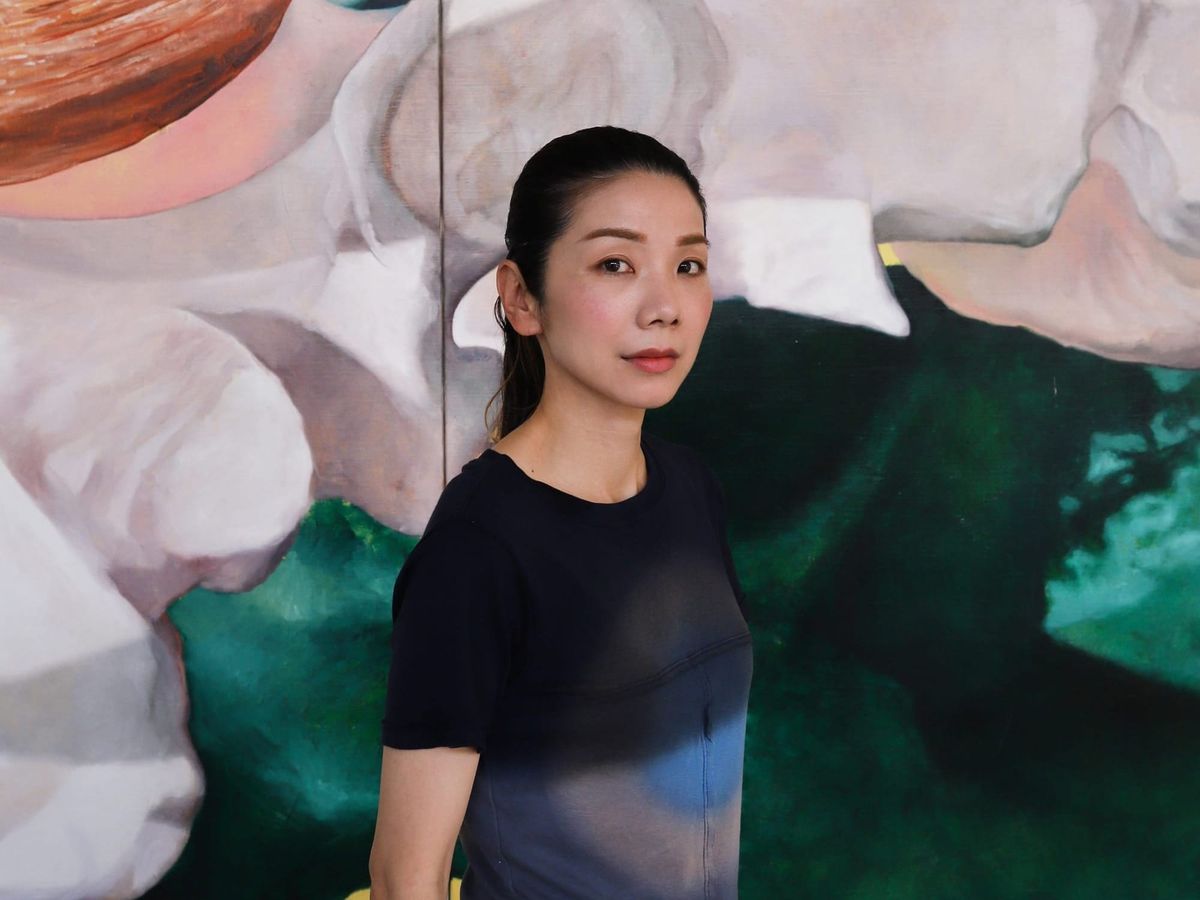
Tension vibrates through Kei Imazu’s oeuvre, where images that normally would never meet are interwoven to create unprecedented mise-en-scènes. In her surrealistic paintings, 3D-printed sculptures, and installations, all marrying organic entities with cybernetics, the ghosts of art history and imperial violence meet contemporary catastrophes—an encounter mediated through Imazu’s personal experience as a Japanese artist living in Bandung, Indonesia. Her vivacious tableaux convey a desire to confront her mother country’s dark past, as well as to comment on the socio-ecological issues of the archipelagic nation in which she currently resides.
Imazu began developing this approach early in the 2000s, when she enrolled in Tama Art University in Tokyo. Around that time, the first-generation MacBook, nicknamed “Onigiri” (after a handheld rice snack), was released, along with Photoshop CS1 and CS2. Imazu still recalls the joy she found in creating images using the new devices and software, particularly the Photoshop function “finger paint,” which allowed her to smudge and blend pixels using a touch panel—a process akin to mixing paint on canvas. Influenced by Gerhard Richter’s blurred photo-paintings and Francis Bacon’s images that deconstruct figures and objects, Imazu began to explore the intricate relationship between classical and digital painting. In her show “Measuring invisible distance” (2018) at YAMAMOTO GENDAI in Tokyo, Imazu echoed the traditional Japanese painting technique of arranging motifs in parallel on flat backgrounds. Within this spatial structure, she inserted tropes from historical Western art—distorted with Photoshop and then painted to render chaos-in-order, diluting the hierarchical chokehold that Western culture had on the discourse taught during her art school years in Japan.