Issue
Journeys Across Sound: An Interview with Tarek Atoui
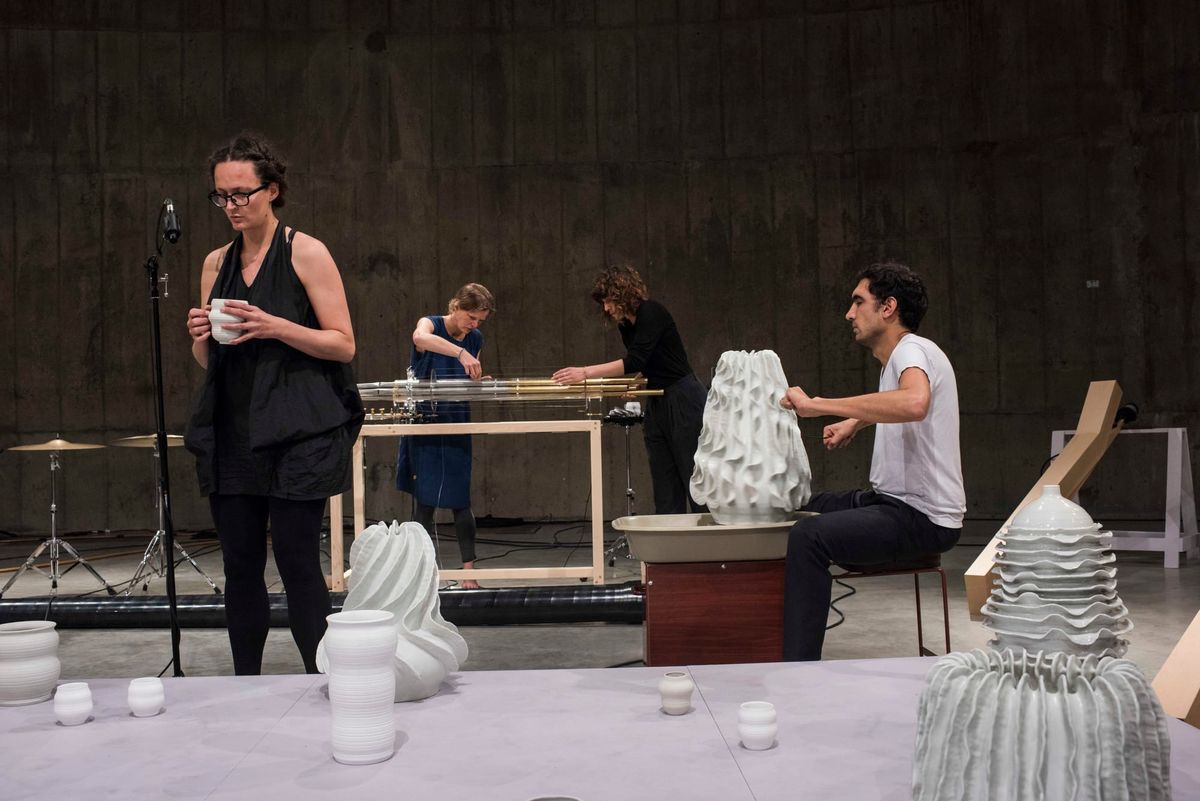
Over the past two decades, Tarek Atoui has established a distinctive experimental sonic practice, working in the interdisciplinary spaces of contemporary art—where it is possible to synthesize and hybridize elements of genres such as electronic music, live performances, and sculptural installations into new formats that defy a singular cultural mode of production. Born in 1980 amid the Lebanese civil war (1975 – 90) and having lived in France since his university years, Atoui has traveled extensively to connect with the musical practices of different cultures. Most recently, he performed an electroacoustic composition, Prelude to Rain (2023), with a Korean instrument maker at the opening of the 14th Gwangju Biennale. In September, the latest iteration of his touring installation project Waters’ Witness (2020) will take place at the Museum of Contemporary Art, Australia, in Sydney. Following the Gwangju opening, ArtAsiaPacific caught up with Atoui to discuss the visual, tactile, and audio aspects of sound; the engineering process behind his projects on the history of instrument-making; and how our experiences with sonic elements shape our perception of the world.
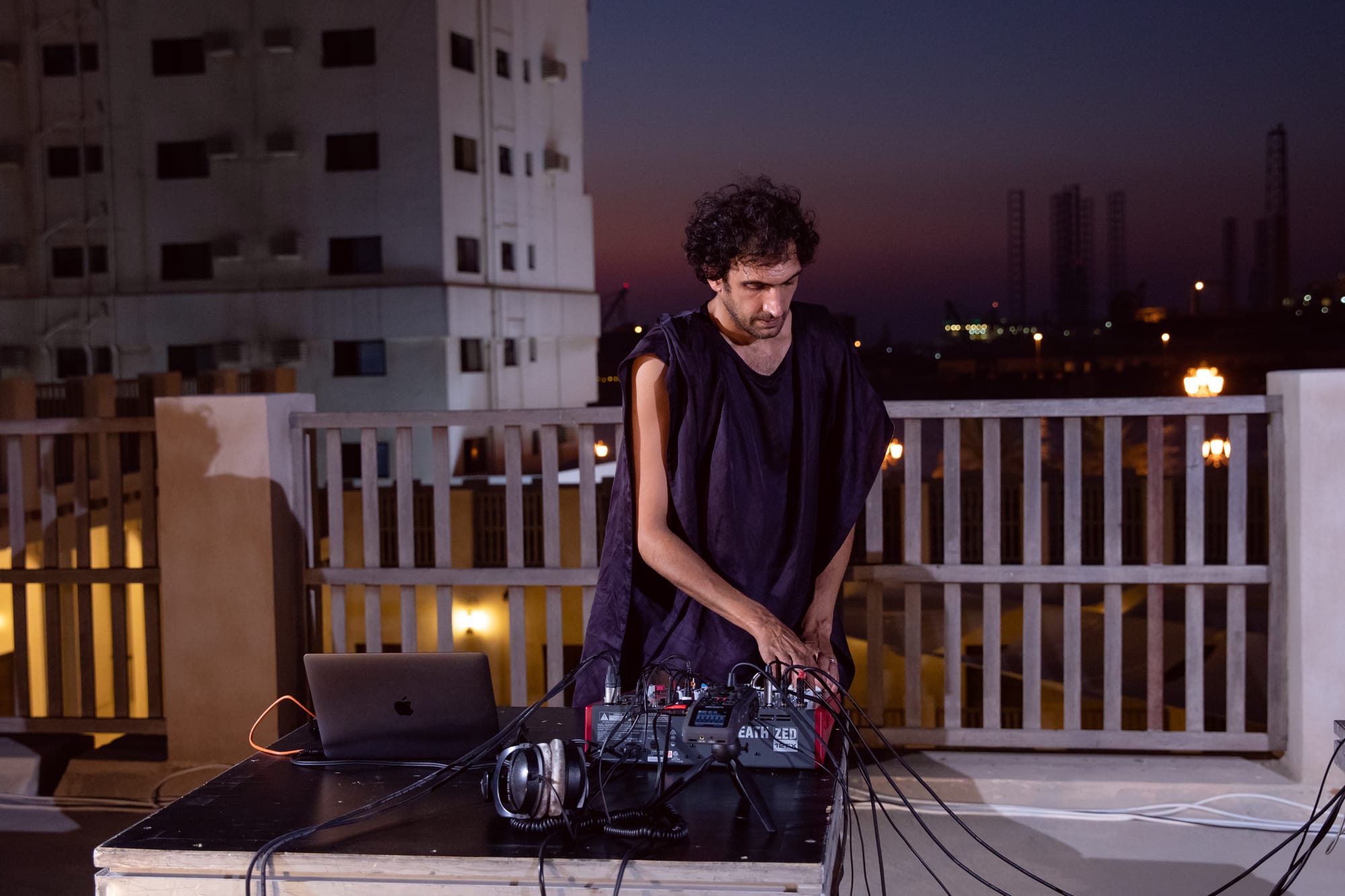
What was your experience of the music and art scenes in Beirut after the civil war? And how did your subsequent move to France shape your understanding of art?
Despite never receiving a music or arts education in Beirut I became interested in literature, math, physics, chemistry, and theater. After the war, in the 1990s, a number of small art initiatives did emerge, but moving to France in 1998 to attend art school allowed me to deepen my understanding of electronic music. I had started DJing, which I did for a while between the ages of 17 and 21, but it was really my love of math and science that helped me understand how sound and computer programming work. As a result, I became eager to explore more experimental work.
How did you shift from DJing to making experimental works of contemporary sound?
One of my earliest influences was the late Dutch composer Michel Waisvisz. He was a pioneer in considering instruments for electronic improvisation and real-time software for techniques of sampling and digital processing. His works influenced how I think and make instruments; how I regard aspects of gesture, movement, and fluidity; and how electronic tools such as computers and sensors allow improvisation to be more fluid. For example, with the machines that I built for Un-drum (2009– ) I was thinking about the stage—about physicality, movement, and engaging with the act of making and playing music.