Issue
Hong Kong: Listening Through Imagery: Interview with Enzo Camacho and Ami Lien
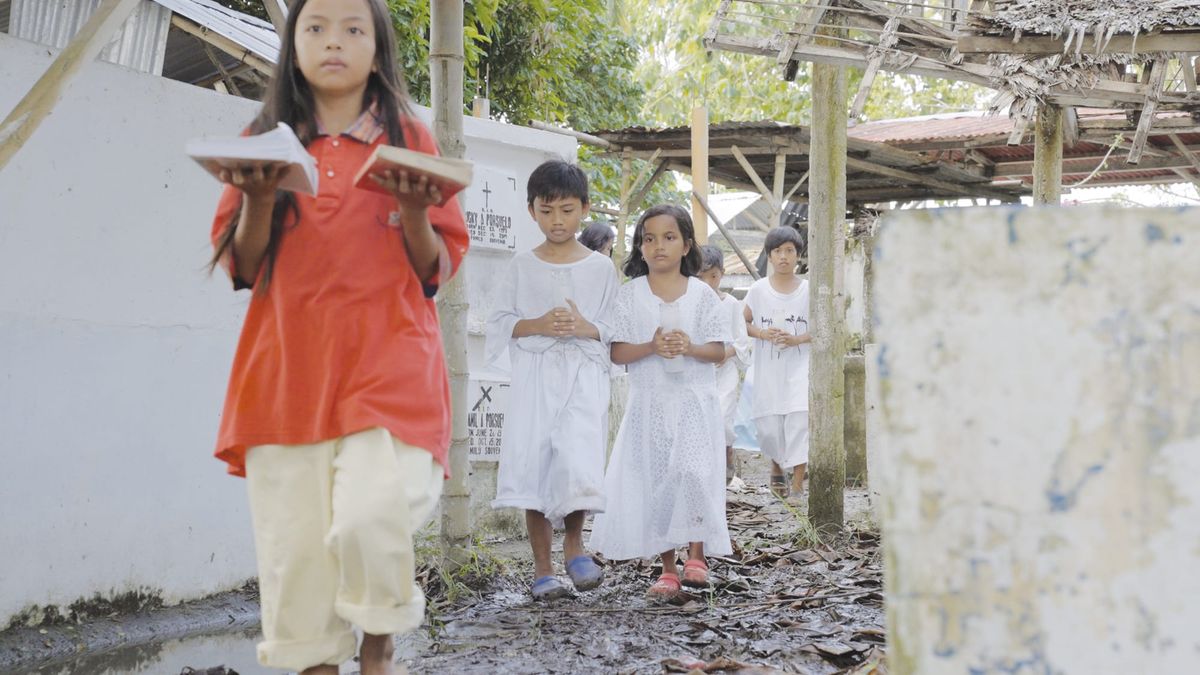
Enzo Camacho and Ami Lien opened their exhibition “Offerings for Escalante” at the Hong Kong nonprofit space Para Site in late October. Featuring handmade paper works and a 16mm stop-motion animation, the exhibition centered around a new film Langit Lupa (2023) that they shot on a sugarcane-plantation in the Philippines island of Negros, where paramilitary forces had massacred at least 20 protesters on September 20, 1985, in the small city of Escalante. While in Hong Kong, Camacho and Lien also organized workshops and a fundraiser for SAKA and MARTYR to bring together labor-activist networks in the Philippines and abroad.
What is “critical listening” and how did you practice it in addressing the Escalante Massacre in your experimental documentary Langit Lupa?
AMI LIEN: The term came out of a conversation we had with Eunsong Kim, who wrote the essay “On Heaven, Earth, Hell” about our film. She was interested in how we sourced the survivor testimonials, which incrementally build up to an account of the events of the Escalante Massacre from the perspectives of the protesters. This narrative format challenges what audiences usually expect from documentaries, which tend to tell the story from the perspective of the documentarian. We initially prepared specific questions, but we didn’t necessarily end up asking them. In the process of conducting the interviews, we recognized how clearly our interviewees wanted to share their experiences through their own culture of narration. “Critical listening” involved making space for that.
ENZO CAMACHO: We tried to allow the survivors to craft their own narratives. We also tried to integrate this kind of critical listening into the form of the film itself, to “give space” through our editing choices and to create the right conditions for absorbing these stories through deliberate pacing or the use of certain visuals. In a way, we wanted to allow the viewers to listen through the imagery.