Issue
Thailand Biennale, Chiang Rai 2023
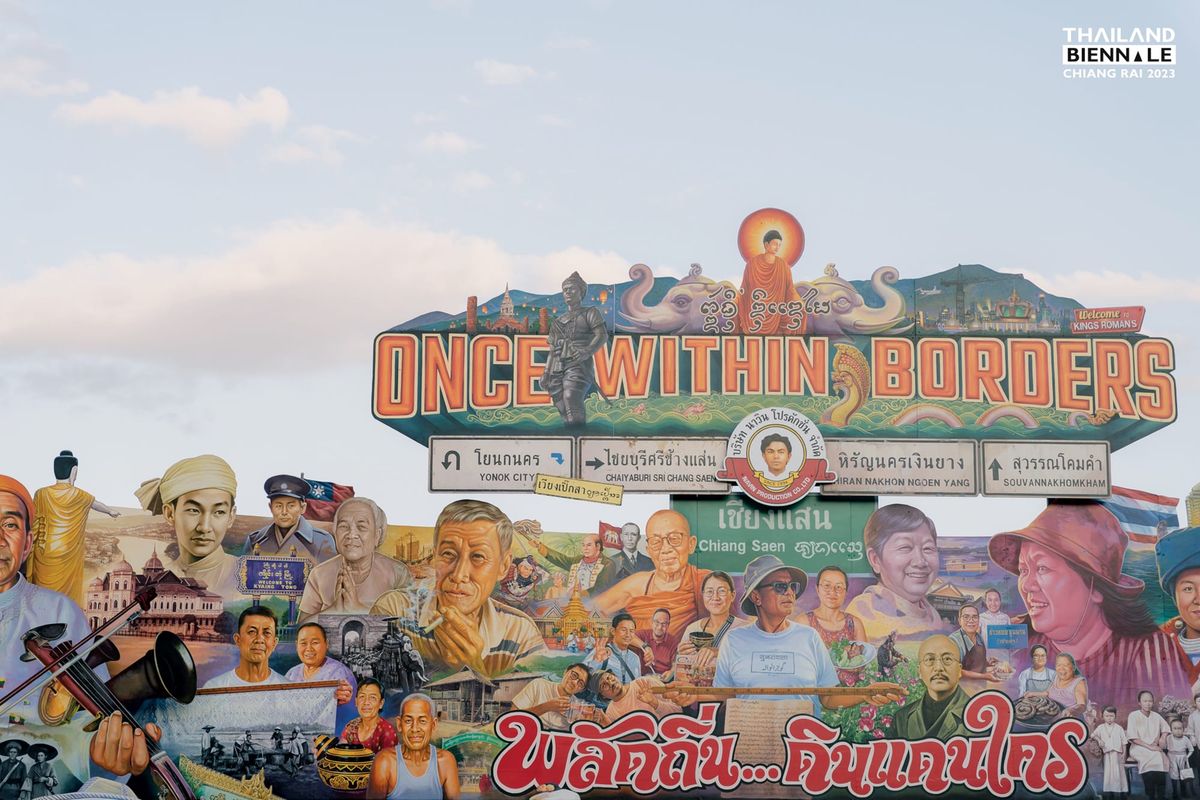
Thailand Biennale, Chiang Rai 2023
Multiple locations, Chiang Rai
The third, and arguably best, edition of the roving, government-sponsored Thailand Biennale took place in Chiang Rai, a remote northern province bordering Myanmar, Laos, and the Mekong River. This mountainous region is, however, mired in unresolved issues: overlooked and contested histories; legacies of war, colonialism, and top-down governance; rural inequality and the marginalization of women, ethnic minorities, and migrants; and imperiled cultural and natural heritage. The show’s 60 Thai and international artists explored how these realities play out in Thailand and around the world, guided by artistic directors Gridthiya Gaweewong and Rirkrit Tiravanija as well as curators Angkrit Ajchariyasophon and Manuporn Luengaram, each having links to the country’s north.
Several works confronted the degradation of the region’s waterways, forests, and biodiversity. Wit Pimkanchanapong’s solemn, single-channel video installation Summer Holiday with Naga (2019) warns against the damming of rivers throughout Southeast Asia. Pimkanchanapong recorded his 300-kilometer kayak journey up the Mekong to the Laotian ancient capital of Luang Prabang, where a hydropower project is under construction. His work transforms the beauty of the wild riverscape into a memento mori. An installation by Nguyen Trinh Thi, Sound-Less (Ri s̄eīyng) (2023), took inspiration from local activists who are fighting Mekong hydropower and rapids-blasting projects. Installed throughout the darkened interior of a timber museum hall were the wooden bars of a disassembled traditional Thai xylophone. Motorized mallets clinked out a halting melody controlled by sensors on a turbine in the Mekong, mourning the great river’s decline.