Issue
Auckland: The Need for Roots: Interview with Brett Graham
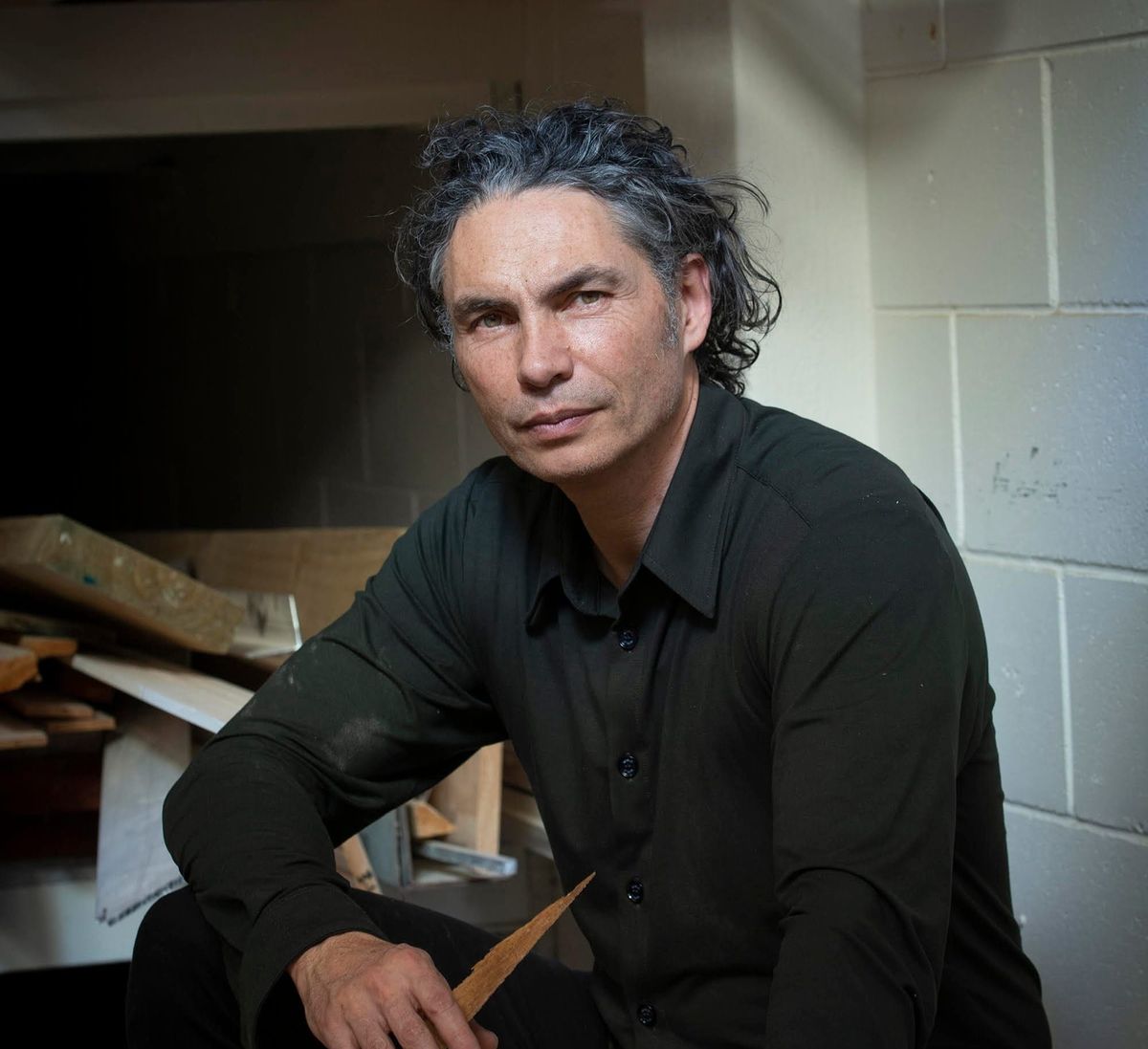
Born in Auckland in Aotearoa New Zealand in 1967, Brett Graham creates large-scale sculptures and installations that investigate the contested colonial histories of his Maōri homeland—chiefly the subjugation of Indigenous land and culture. In this interview, Graham emphasized the importance of Indigenous knowledge when it comes to tackling the climate emergency, as well as the influence of his father, the sculptor Fred Graham.
Along with your father, you were one of several artists from Aotearoa New Zealand to exhibit work in the 60th Venice Biennale. How did you both respond to this year’s curatorial theme of “Stranieri Ovunque – Foreigners Everywhere”?
Indigenous populations remain minorities in their own land—ostracized by the majority culture and viewed as outsiders. Māori in Aotearoa New Zealand resist this characterization. The curator, Adriano Pedrosa, chose my father’s work, along with works by Sandy Adsett and Selwyn Wilson, all of whom represent a generation of Māori artists who absorbed aspects of European modernism while maintaining a Māori worldview and narrating Māori stories. Two of my father’s sculptural works—Ngā Tamariki a Tangaroa (Children of the Sea God) (1970) and Tinirau and the Whale (1971)—are about guardianship over the land and sea, as well as the protection of resources. My own response was Wastelands (2024), a large-scale sculpture representing a Māori viewpoint of the natural world in which wetlands are a valuable resource that need protecting. By highlighting Mātauranga Māori (Māori knowledge) in a major European exhibition, and in a context surrounded by other prominent Indigenous artists such as Marlene Gilson (Australia) and Emmi Whitehorse (USA), I believe we were successful in disrupting the notion that we are “strangers in our own land.” We all exemplified the strong, ongoing existence of our Indigenous worldviews.