Ideas
Mobile M+: Moving Images (Part Four)

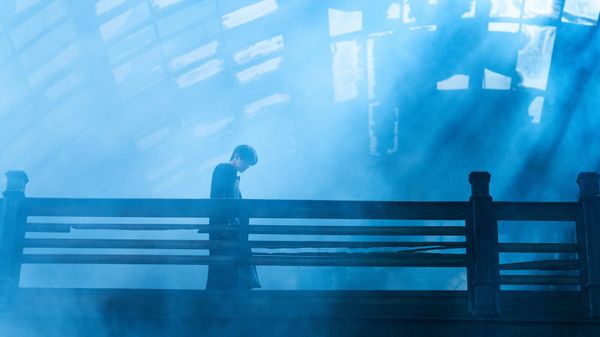
The third installment for “Mobile M+: Moving Images,” proved to be a tearjerker. Screened back-to-back on a Saturday afternoon, the three films examined the expectations, dreams and disparities of immigrants under an overarching theme of “Dreams.”
The afternoon began with the 1990 full-length feature film, “Full Moon in New York,” an early picture by renowned Hong Kong director Stanley Kwan, whose other acclaimed works include “Love Unto Waste” (1986) and “Rouge” (1987). Lauded for his humanistic portrayals with particular sensitivity toward sexuality and gender roles, “Full Moon in New York” epitomizes Kwan’s style as the plot intertwines the stories of three Chinese women—from Hong Kong, Taiwan and the mainland—in New York.
The film opens with the wedding of Chao Hong, played by Siqin Gaowa, a mainland Chinese woman who has relocated to New York to marry a Chinese-American man. Emphasis on her language barrier makes her displacement immediately evident. As her story progresses, Chao—outwardly happy in her marriage—makes enormous efforts to adapt to Western culture but suffers homesickness and grief as her husband fails to understand Chao’s strong filial desire to bring her mother, a survivor of the Cultural Revolution, to New York.
Maggie Cheung as the character Li Feng Jian, a financially secure, career-driven woman from Hong Kong, operates a restaurant in Chinatown with her father and dabbles in real estate. Li's assertiveness is illustrated early on when she removes her high heel to slap a man sexually harassing her. Throughout the film, Li struggles with her sexual identity as a lesbian while she attempts to appease her father’s desire to see her marry a man.
Wang Hsiung Ping, a struggling Taiwanese actress played by Sylvia Chang, finds herself uncertain of future plans after a breakup with her American boyfriend and roomate. Upon visiting her father’s house, she discovers that he has been sexually abusing a mainland Chinese woman whom he has been living with and mentoring as a writer. The discovery shatters her relationship with her father leaving her further at a loss.
With a bleak, gray cinematic palette—a deliberate manipulation of color film by Kwan—“Full Moon in New York” weaves three stories, each centered on a different facet of displacement in the lives of the women who find a bond in their shared despair. Chao struggles to assimilate a new cultural identity for the sake of her marriage. Meanwhile, questions of self-identity are posed in Wang’s theatre auditions, particularly in one instance where Wang is questioned, “What makes a Chinese woman or a Japanese woman think she can play Macbeth?”
The film ends with the women sharing drinks on a building rooftop upon New York’s first snowfall of the season. Kwan asserts that the story is deliberately left open-ended, so that one may imagine the futures of these women.

Staying in New York, the screening continued with American experimental filmmaker Lynne Sachs’s “Your Day is My Night” (2013) followed by “China Town” (1992–2011) by Taiwanese photographer Chang Chien-chi. Although not as entertaining as the box-office feature, both films shed light on the heartbreaking stories of the many illegal Chinese immigrants in the United States, laboring at low-paid manual jobs in the hopes of providing a better life for their families back home.
A hybrid documentary of autobiographical monologues converged with fictional, scripted scenarios, “Your Day is My Night” follows a group of illegal Chinese immigrants residing in a "shift-bed" apartment in New York City. The bed becomes a metaphorical platform upon which both anecdotal and intimate stories are shared.
Wrapping up the day’s screenings, “China Town,” is a telling tale of time and enduring love. The 20-minute video work juxtaposes black-and-white with color images alongside contrasting moments of stillness and motion across a split screen. Flashes of English text become a narrative tool as the short film examines the dreams and disparities of the men and women working in New York and those of their families waiting for the day they may reunite. Perhaps the title “Unfulfilled Dreams” would have more accurately tied together the three differently formatted filmic portraits of Chinese immigration.
Denise Tsui is assistant editor at ArtAsiaPacific.