Issue
No Culture in a Dry World: Notes from the Aral Sea
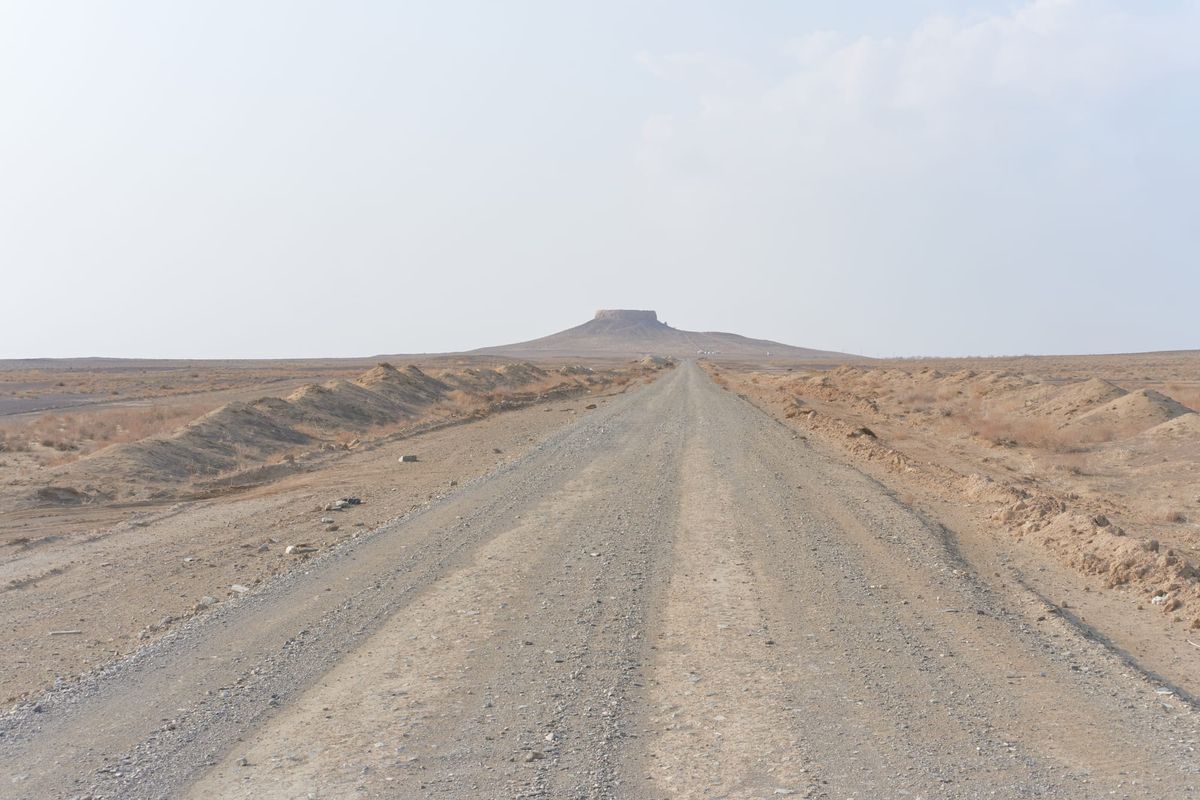
“When do we reach the sea?” my companion asks, clinging to the front seat of the car as it lurches in the tracks cut into the desert floor. Our guide, a Russian-speaking local from the Autonomous Republic of Karakalpakstan in the northwest of Uzbekistan, gestures to the baked sands outside. “We are already in it.”
Our party had left the city of Nukus two hours earlier and driven north toward Moynaq, a once bustling seaport now 150 kilometers from the water in what is currently the Aralkum Desert. Moynaq was formerly home to more than 60,000 residents and part of a network of thriving fishing communities fringing the Aral Sea. Most worked on the boats or in the canneries on the coast of what used to be a body of water larger than Ireland. Today, what remains is smaller than Los Angeles and saltier than the infamously saline Dead Sea.
The waters receded in part because of Soviet-era canal projects intended to irrigate the surrounding desert for agriculture, in part through the failure of the post-Soviet states to coordinate the flow of the Amu Darya and Syr Darya rivers that were the Aral’s lifeblood. As sea levels dropped the people of Moynaq moved south to the cities or northwards, from island to island, in futile pursuit of the sea. Some inhabitants remain on the islands that exist today only as isolated hills. Our driver tells us another story of the Aral’s disappearance, of an island that no longer exists on the map or in reality, where the Soviets secretly tested nuclear weapons. He says that underground explosions opened fissures deep beneath the sea, leading to the water retreating to the nearby Caspian. One evening, the ground shook and the shoreline receded by over a kilometer in under an hour, leaving the few remaining fish gasping in the mud.